
Figurines d'Acámbaro
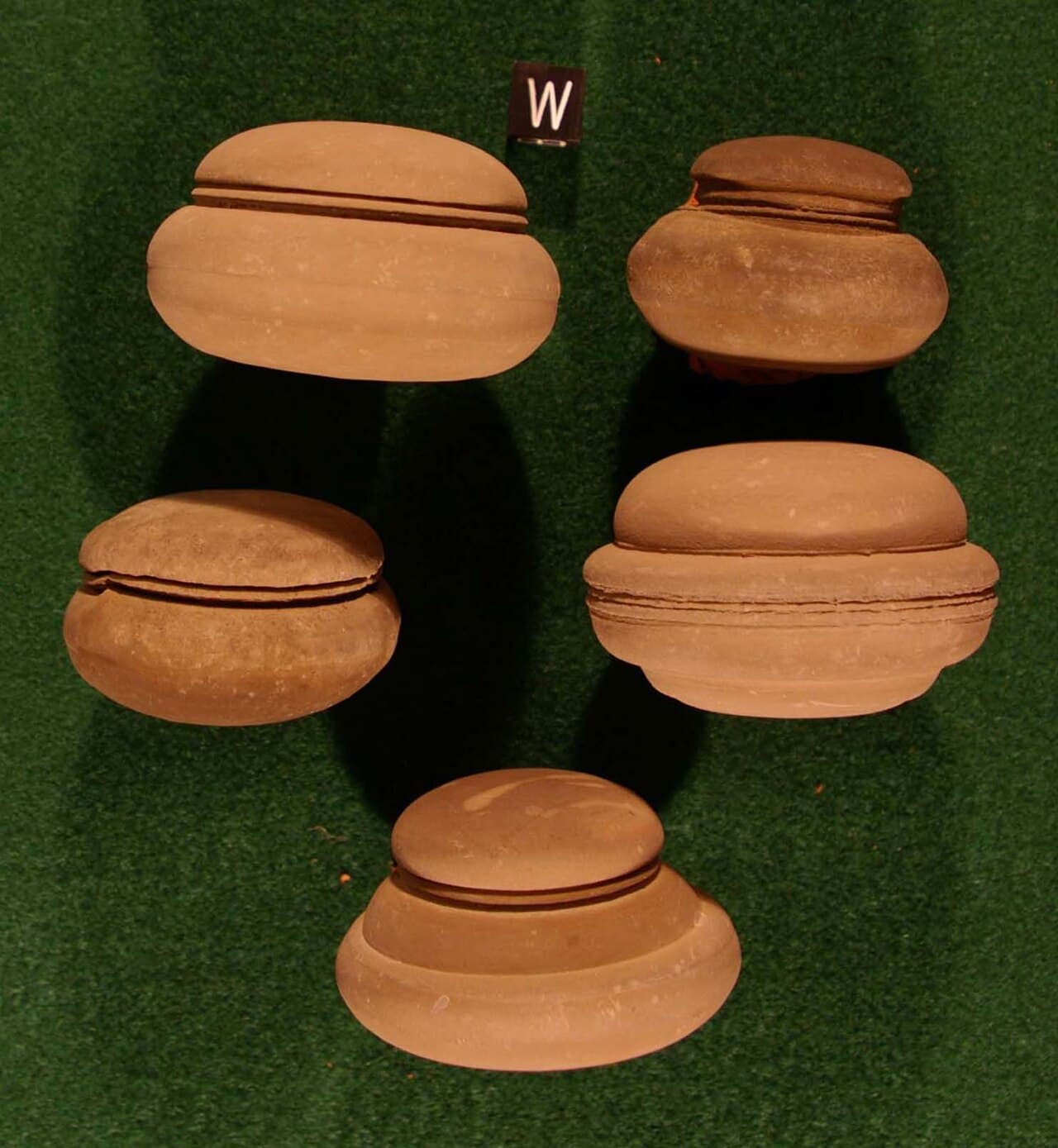
From 1944, trader Waldemar Julsrud amassed more than 33,000 terracotta figurines at Acámbaro (Guanajuato), some resembling prehistoric reptiles — a flagship argument for young-Earth creationism to "prove" human-dinosaur coexistence. Archaeologist Charles DiPeso settled the matter as early as 1953: surfaces without patina or wear, crevices without sediment, recent backfill, and testimony from a local family paid one peso per piece. Thermoluminescence dating (Carriveau & Han, 1976) confirms a recent firing.
- Lieu
- Mexico · Amériques
- Civilisation
- —
- Période
- fabrication moderne (XXe s., collectées dès 1944)
- Technique
- ~33 000 figurines en terre cuite modelées à la main ; représentations d'humains et d'animaux interprétées à tort comme des dinosaures
- Études
la preuve du faux est documentée. Photographie révisable de l’état des recherches, jamais un jugement.
→ Situer sur la carteLes éléments du site
Où se trouve le site
20.030° N, 100.720° O · vue satellite
Ce que dit la science
Réfutation DiPeso 1953 (American Antiquity 18(4)) : surfaces sans patine, arêtes vives, pas de sédiment dans les crevasses ; stratigraphie de remblai récent ; enquête de terrain identifiant les fabricants locaux
Thermoluminescence invalide (Carriveau & Han 1976, American Antiquity 41(4):497–500) : échec du 'plateau test' ; signal indiquant une cuisson ~30 ans avant les tests, soit vers 1940
Absence de contexte stratigraphique préhistorique : aucun ossement mésozoïque, aucun artefact daté de l'ère des dinosaures ; correspondance des formes avec des bandes dessinées contemporaines (Penn Museum)
Ce qui reste inexpliqué
Relié à
Études & sources
Continuer l’exploration
 Réfuté
Route de Bimini
At 5 meters' depth off North Bimini, a 0.8 km row of rectangular limestone blocks looks like a paved road. Geology settles it clearly: it is natural beachrock, a tropical phenomenon documented throughout the Caribbean basin. The controversy was born in 1968 from a calendar coincidence with an Edgar Cayce prophecy, and from our brain's ability to see order where there is only fluid physics.
 Réfuté
Sphères de Klerksdorp
Metallic-looking spheres extracted from the pyrophyllite mines of Ottosdal (South Africa), about 3 billion years old and bearing parallel grooves, fueled the myth of an OOPArt manufactured by a civilization or extraterrestrials. In reality, these are ordinary geological concretions — pyrite, hematite or wollastonite — formed by aqueous precipitation in sediments; the grooves are merely imprints of fine sedimentary laminations, explained since 1988.
Vase de Dorchester
In June 1852, Scientific American relayed a short item from the Boston Transcript: a black-powder blast in Dorchester (Massachusetts) had allegedly uncovered a metallic vase in Precambrian rock — imagined proof of a vanished civilization. The refutation is categorical: the object is identified as a 19th-century Indian bidriware hookah base (a twin piece is catalogued at the Victoria & Albert Museum, no. 137-1852); it fell into the blast debris rather than being extracted from the rock, and the 1852 article itself gives no geological dating.