Namoratunga
Namoratunga II (Kalokol Pillar Site) is a set of 19 basalt pillars on the west shore of Lake Turkana, dated to the Pastoral Neolithic (~2400 BCE), forming a communal burial site of the region's first pastoralists. In 1978, Lynch & Robbins proposed in Science that the pillars align on seven stars of the Cushitic luni-stellar calendar (Pleiades, Orion, Sirius…), making Namoratunga the first archaeoastronomical evidence in sub-Saharan Africa. This hypothesis was challenged as early as 1982 by Soper, who pointed out inconsistencies in the angular measurements and questioned the historical depth of the Borana calendar; in 1986, Doyle & Wilcox conducted a statistical analysis calling into question the significance of the alignments. The debate remains open: the burial nature of the site is established, the astronomical role is not proven.
- Lieu
- Kenya · Afrique
- Civilisation
- Pasteurs cushitiques du lac Turkana (Néolithique Pastoral)
- Période
- Néolithique Pastoral, daté au radiocarbone à ~2398 ± 44 av. J.-C. ; première interprétation à ~300 av. J.-C. dépassée par la datation récente
- Technique
- 19 piliers de basalte polygonaux quasi-cylindriques en disposition circulaire ; cairns funéraires en pierres associés (Namoratunga I = nécropole à cairns sans piliers)
- Études
appui réel, pas tranché. Photographie révisable de l’état des recherches, jamais un jugement.
→ Situer sur la carteOù se trouve le site
3.423° N, 35.803° E · vue satellite
Ce que dit la science
Site funéraire du Néolithique Pastoral daté au radiocarbone à 2398 ± 44 av. J.-C., constituant l'un des plus anciens ensembles mégalithiques d'Afrique de l'Est.
19 piliers de basalte polygonaux disposés en formation circulaire, rive ouest du lac Turkana, comté de Turkana (Kenya).
Le site appartient à un réseau de nécropoles pastorales (Lothagam North, Manemanya) attestant des communautés pastorales organisées dans la région du Turkana ; Namoratunga I (Lokori) est un site à cairns sans piliers du même complexe funéraire.
Candidature UNESCO au patrimoine mondial soumise le 30 juin 2023.
Les piliers sont orientés vers les mêmes sept étoiles/constellations (Triangulum, Pléiades, Bellatrix, Aldébaran, Orion central, Saiph, Sirius) que celles utilisées par les Borana Oromo contemporains pour leur calendrier luni-stellaire de 354 jours — corrélation observée, causalité non démontrée.
Ce qui reste inexpliqué
Relié à
Études & sources
Continuer l’exploration
 En débat
Thimlich Ohinga
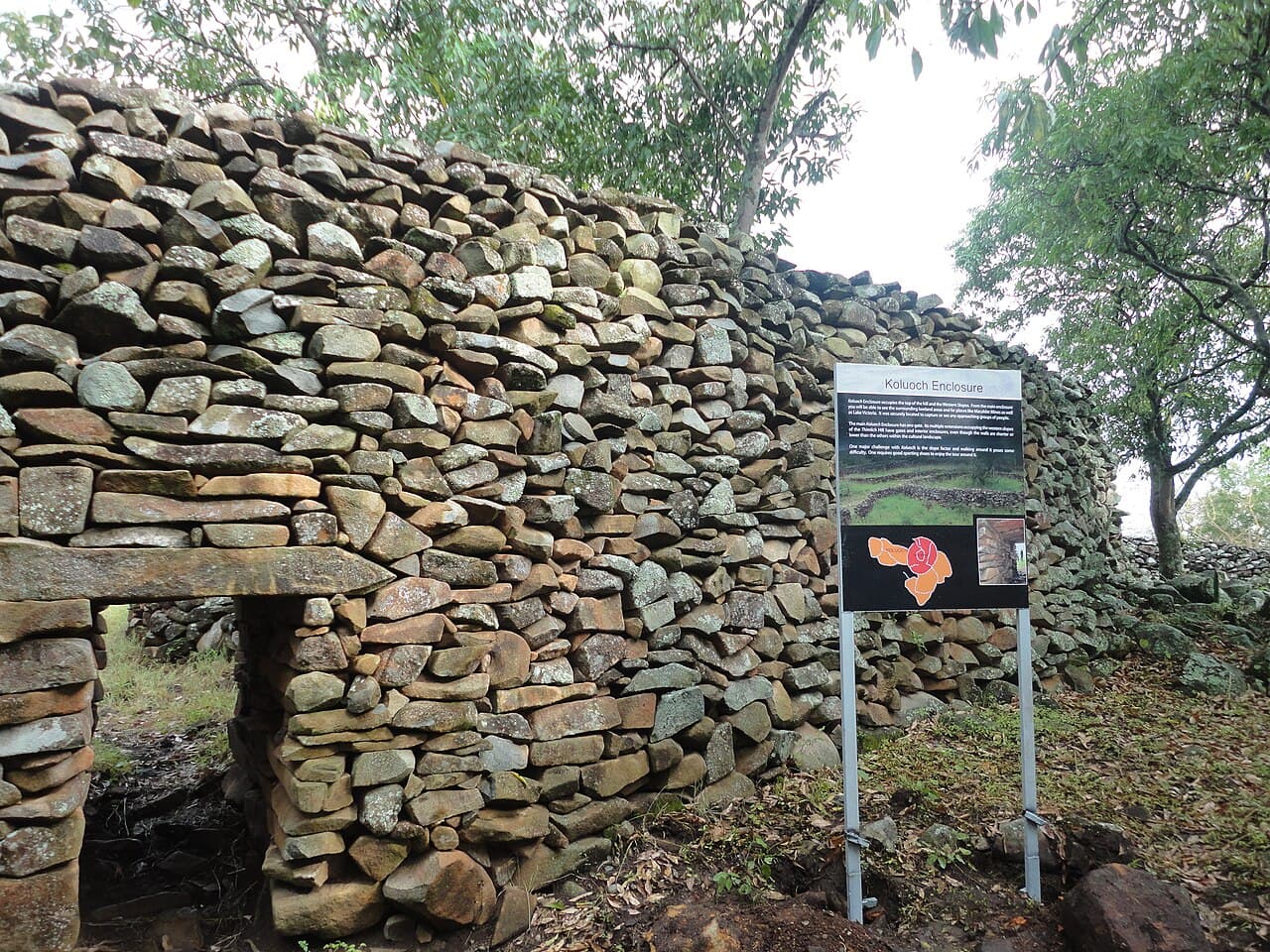
Double-faced dry-stone enclosures, without mortar, near Lake Victoria. Built between the 15th and 16th centuries by Bantu communities and later the Luo. Who started them, who continued them?
 En débat
Osireion d'Abydos
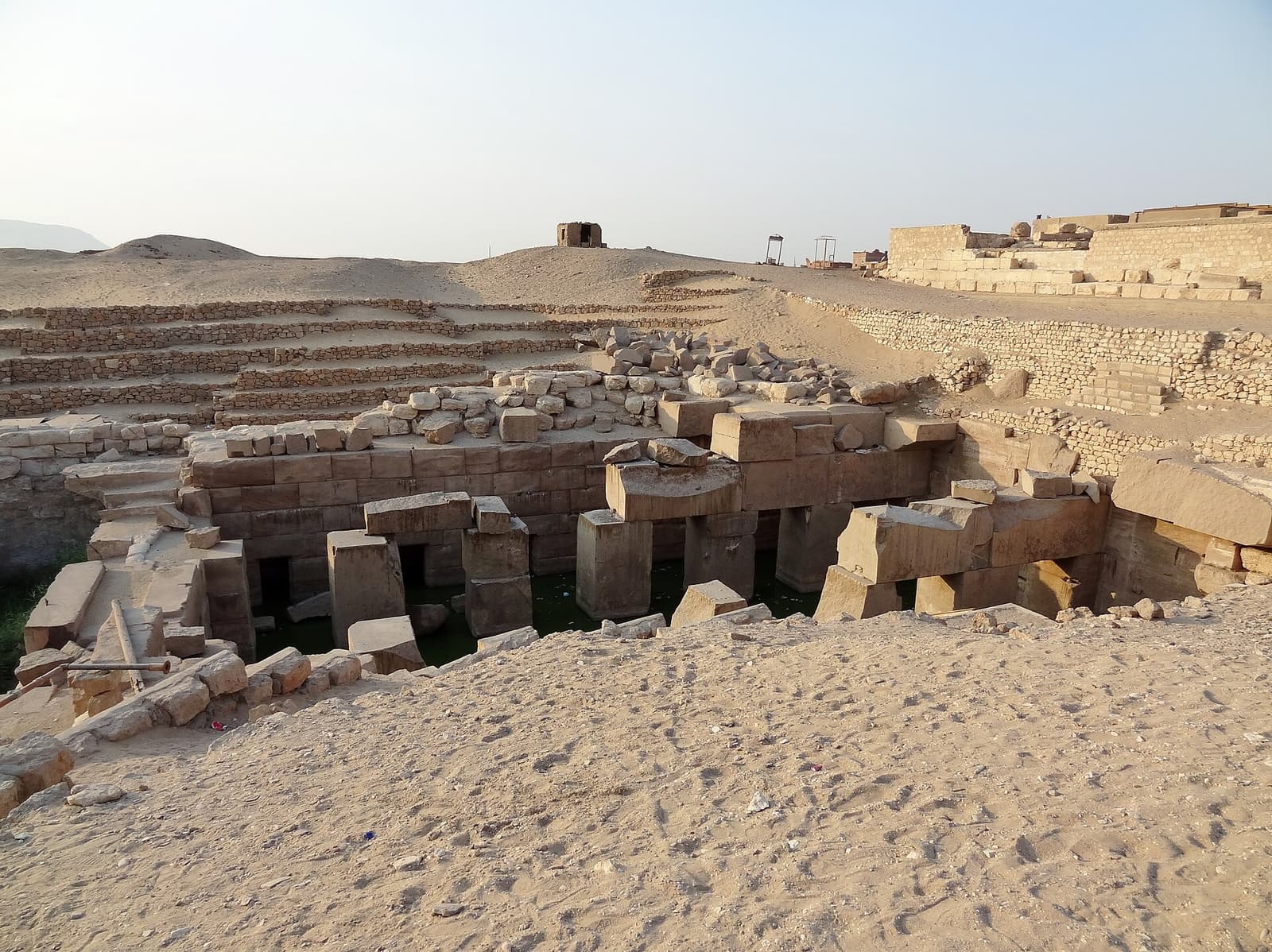
A massive granite structure buried 13 meters under the sand, flooded by the water table for centuries. Built by Seti I as a cenotaph of Osiris — the theory of an older site, advanced by Naville in 1914, has since been refuted but is still sometimes cited.
 Consensus établi
Églises de Lalibela — Biete Ghiorgis
Eleven churches carved from a single block of rock, with no masonry added. At Lalibela, construction does not add up — it subtracts. Biete Ghiorgis, the most perfect, descends into a trench 25 m to a side: a three-dimensional Greek cross cut into the tuff, with its gutters, its light shafts and its drainage channels, still in use 800 years later.