
Sungbo's Eredo
A 160-kilometer earthen rampart-and-ditch, dug by hand around the year 1000 around a Yoruba kingdom. Tradition attributes it to a childless queen — whom people confuse with the Queen of Sheba. The dating evidence, however, contradicts this.
- Lieu
- Nigeria · Afrique
- Civilisation
- Ijebu (Yoruba)
- Période
- ~670 → ~1050 apr. J.-C.
- Technique
- Rempart de terre + fossé (« ditch-and-bank »), entièrement à la main
- Études
- Levé Darling (1997) ; stratigraphie Lasisi & Aremu (2016) ; première cartographie LiDAR complète en 2024.
l’état des recherches converge — révisable. Photographie révisable de l’état des recherches, jamais un jugement.
→ Situer sur la carteOù se trouve le site
6.833° N, 3.900° E · vue satellite
Ce que dit la science
Le plus grand monument de terre d'Afrique : un système rempart-fossé de ~160–170 km de périmètre (levé Darling 1997, confirmé au LiDAR en 2024), où le différentiel entre le fond du fossé et la crête du talus atteint ~20 m. ~3,5 millions de m³ de terre déplacés à la main.
Datation radiocarbone (charbons de la déforestation préalable) : ~AD 670–1050 (Darling 1997), avec des sections datées XIVᵉ–XVᵉ s. (Ife-Sungbo, 2014) — soit une construction en plusieurs phases plutôt qu'un chantier unique. Fonction consensuelle : défensive et délimitation d'un royaume ijebu.
Sur la liste indicative de l'UNESCO depuis 1995 (entrée groupée « Benin Iya / Sungbo's Eredo »), non encore inscrit ; la cartographie LiDAR de 2024 sert de base à un futur dossier.
Ce qui reste inexpliqué
Relié à
Études & sources
Continuer l’exploration
 En débat
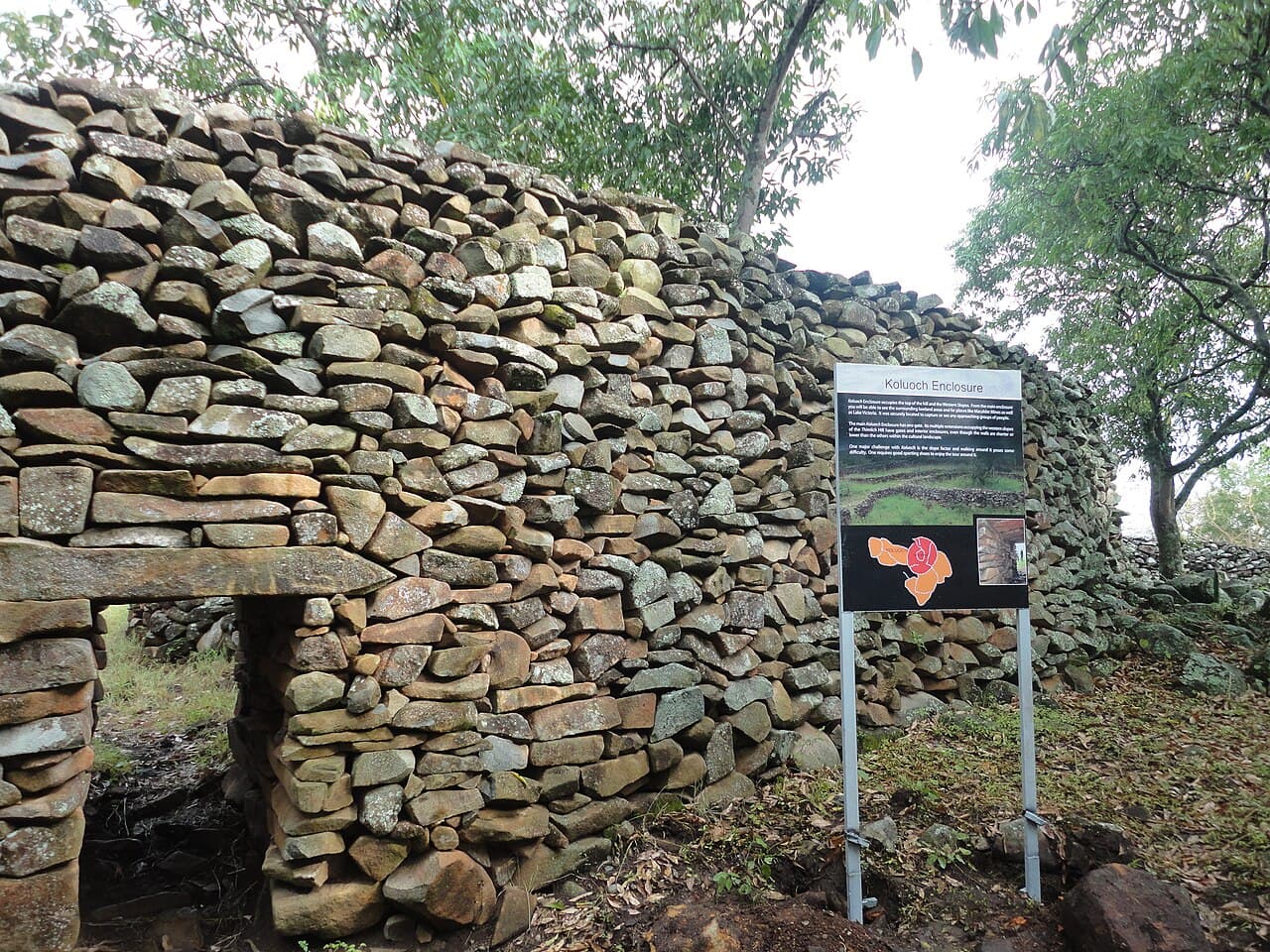
Thimlich Ohinga
Double-faced dry-stone enclosures, without mortar, near Lake Victoria. Built between the 15th and 16th centuries by Bantu communities and later the Luo. Who started them, who continued them?
 En débat
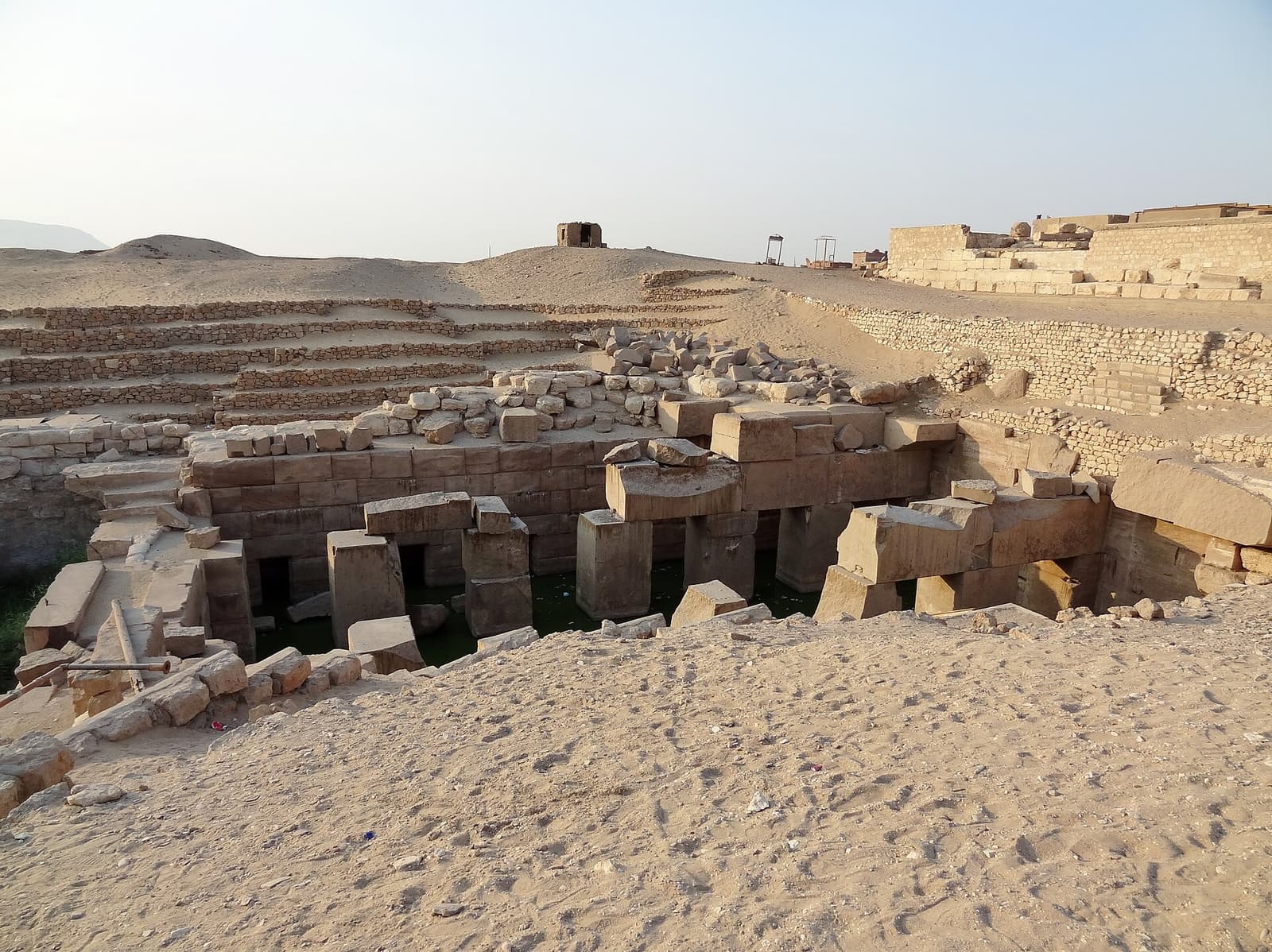
Osireion d'Abydos
A massive granite structure buried 13 meters under the sand, flooded by the water table for centuries. Built by Seti I as a cenotaph of Osiris — the theory of an older site, advanced by Naville in 1914, has since been refuted but is still sometimes cited.
 Consensus établi
Églises de Lalibela — Biete Ghiorgis
Eleven churches carved from a single block of rock, with no masonry added. At Lalibela, construction does not add up — it subtracts. Biete Ghiorgis, the most perfect, descends into a trench 25 m to a side: a three-dimensional Greek cross cut into the tuff, with its gutters, its light shafts and its drainage channels, still in use 800 years later.